Franco Pagliarulo Teaching Method – An Isogen Approach to Drawing
Welcome to Altamira Art School in Pietrasanta, Tuscany — a place where the spirit of the Renaissance lives on.
Discover the timeless beauty of creating by hand through group and individual art courses for children and adults.
Here, in a city where art breathes through every stone, you can learn fresco painting, life drawing and painting from nature, the art of portraiture, and Japanese calligraphy, in English or Italian. Guided by artist Franco Pagliarulo, with over thirty years of experience, Altamira is more than a school — it’s a living bottega, where tradition and creativity meet.
This teaching method can be described as isogenic: born from different artistic traditions and unified into a personal language.
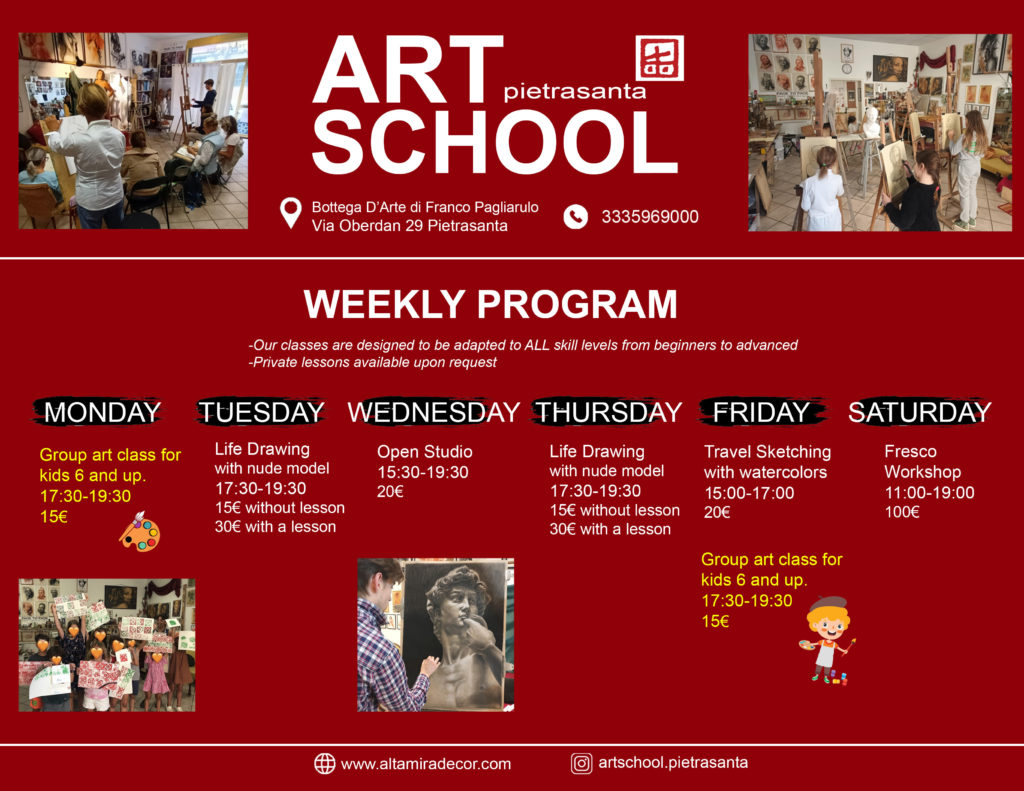
ART WORKSHOPS
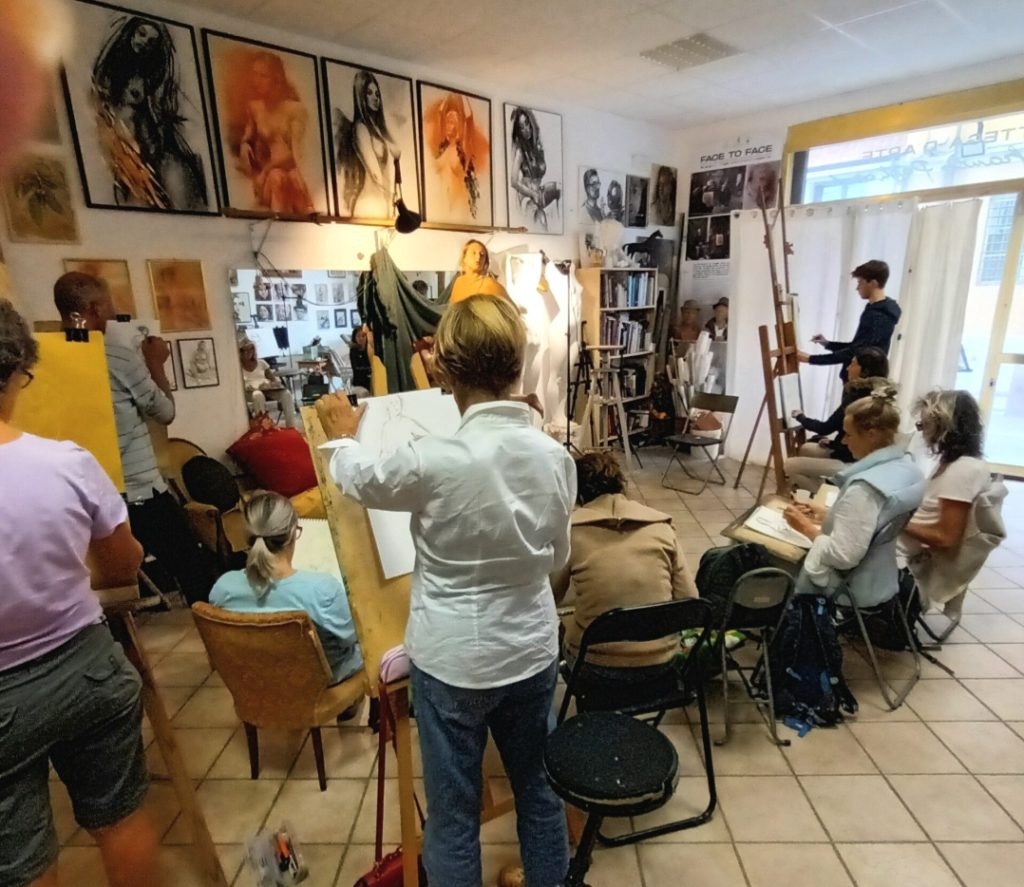
Life drawing with nude model
TUESDAY & THURSDAY
17.30 – 19.30
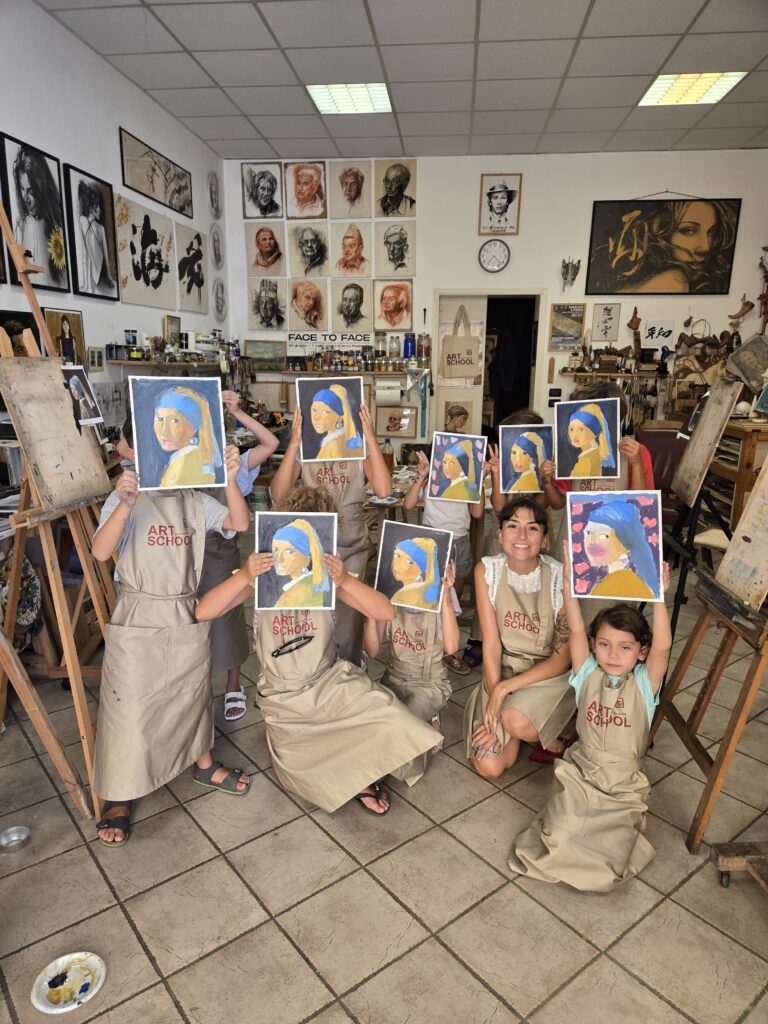
Group Art Class for Kids 6 and up
MONDAY & FRIDAY
17.30-19.30
Joyful group sessions that open the door to creativity through knowledge of drawing and painting techniques.
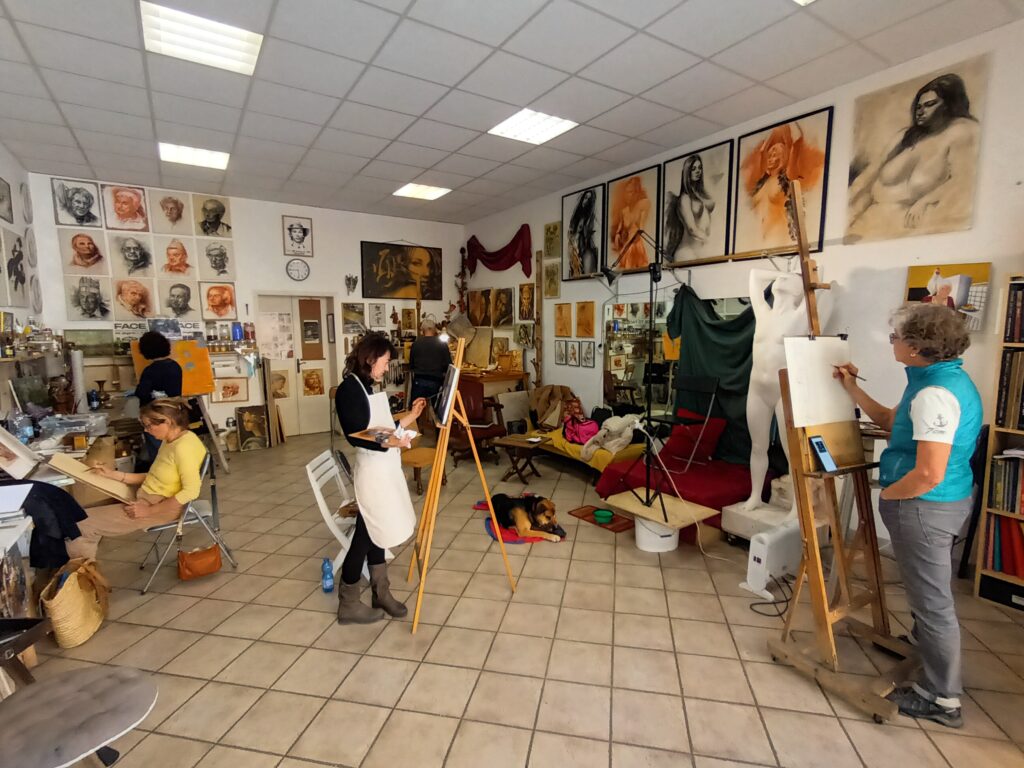
Open Studio
WEDNESDAY
15.30-19.30
The studio is open! You work on your project independently together with other students with the supervision of Franco.
Urban & Travel Sketching
(with Watercolor)
FRIDAY
15.00-17.00
Capture Tuscan life and landscapes through quick, expressive sketches colored with the transparency of watercolor.
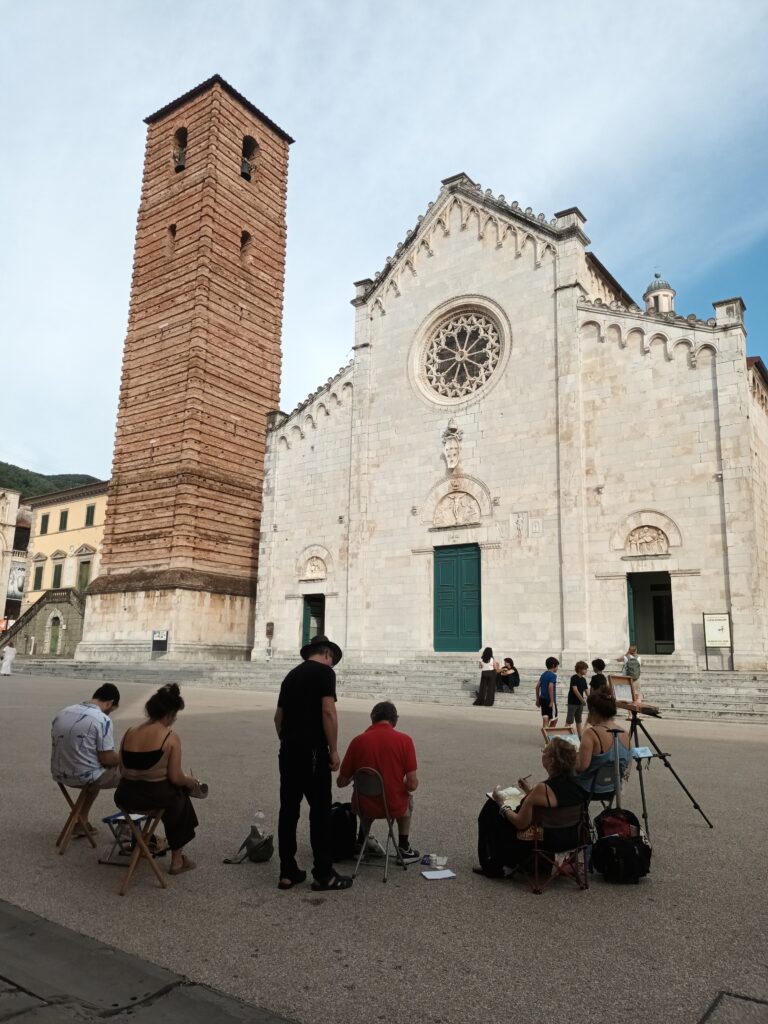
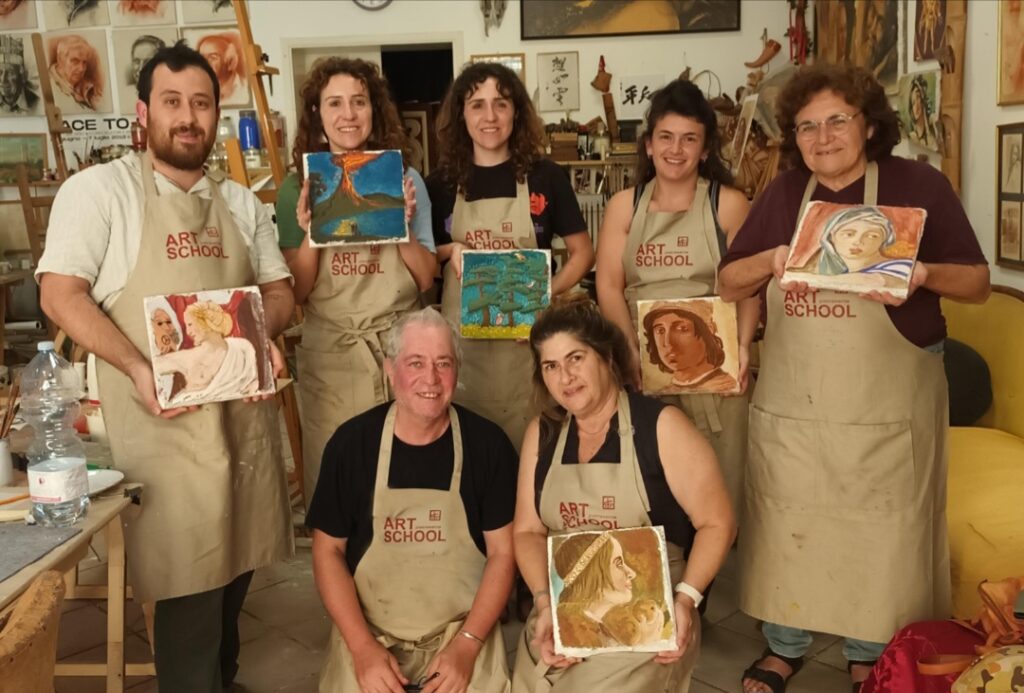
Fresco Painting & Sgraffito
Discover the ancient art of painting on fresh plaster using natural pigments, where color meets lime and light.
SATURDAY
11.00-19.00
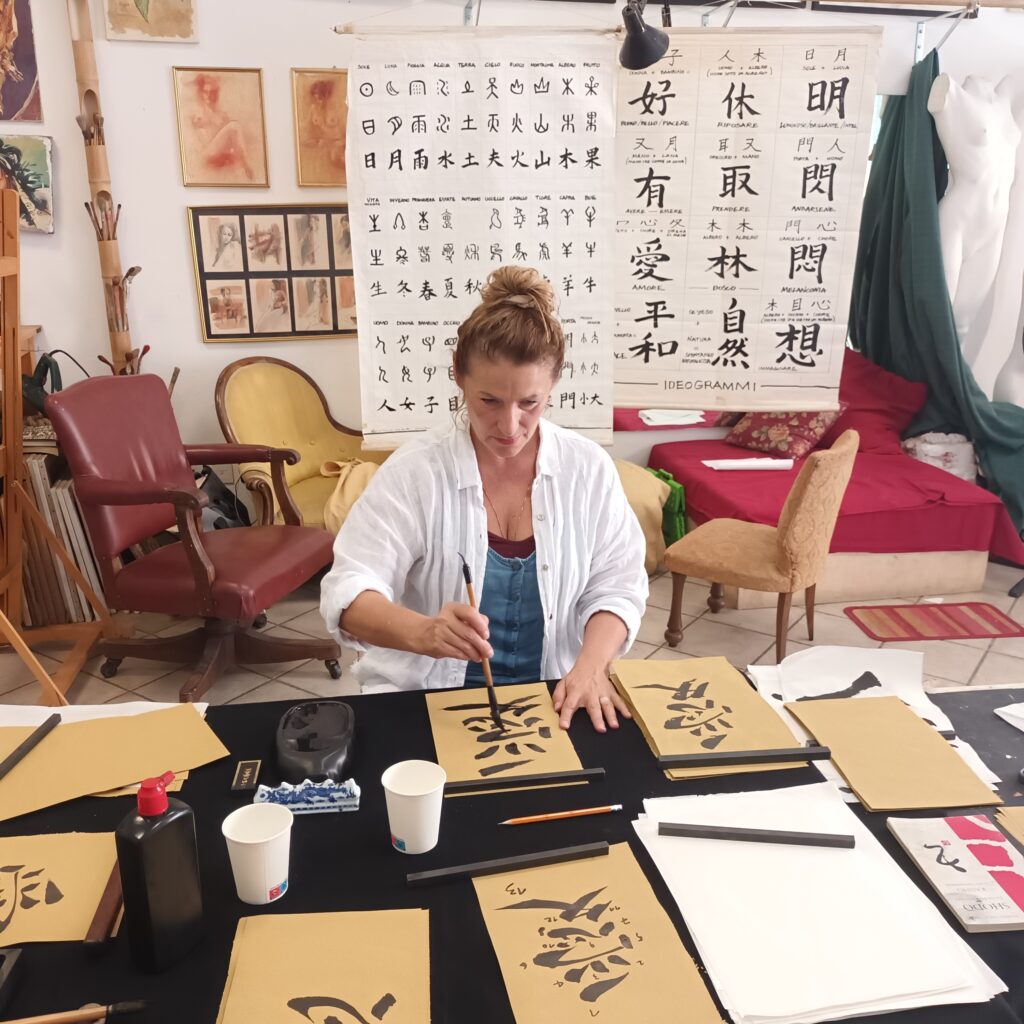
Private Lesson
Life drawing, painting and Shodo: Japanese calligraphy. On days and times to be agreed.
techniques: pencil, charcoal, pastel, oil, ink
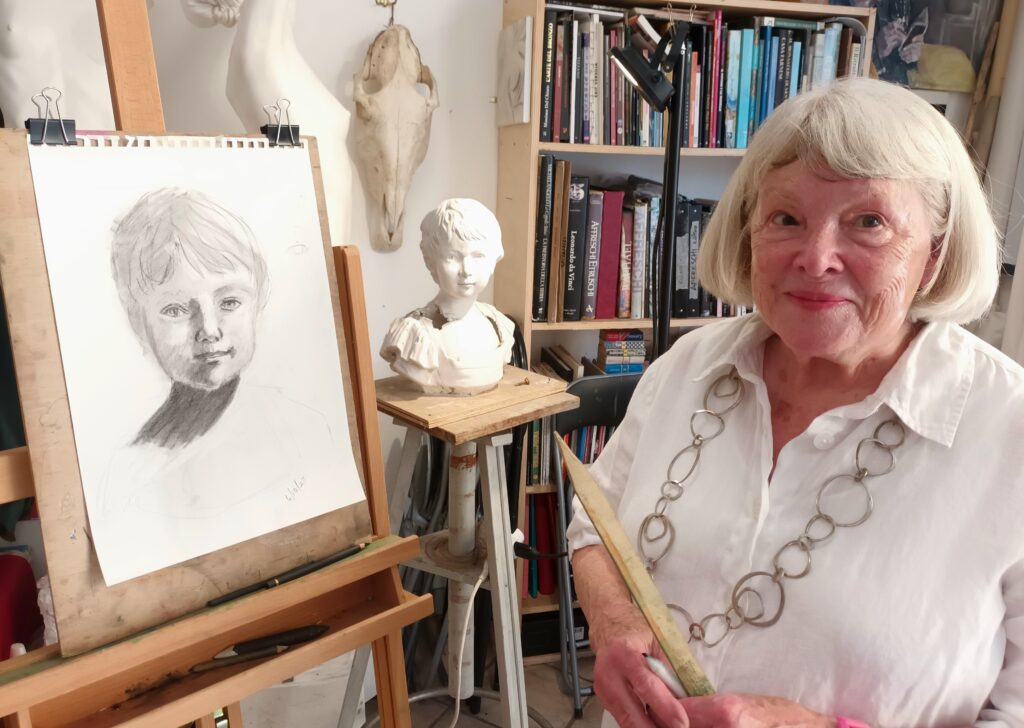
IN BOTTEGA
Monday to Wednesday (2 hour with a nude model on Tuesday). The student comes to the studio and does exercises under the supervision of the Master.
Each workshop is an encounter with beauty, tradition, and your own creative rhythm — under the Tuscan light that has inspired artists for centuries.
Metodo didattico di Franco Pagliarulo
Tra costruzione occidentale e intuizione orientale
Il Metodo didattico di Franco Pagliarulo nasce da oltre trent’anni di pratica artistica e insegnamento.
È un percorso che unisce il rigore della tradizione occidentale – costruzione, proporzioni, osservazione dal vero – con l’approccio intuitivo dell’arte orientale, basato sul gesto, sul segno e sulla sensibilità del corpo.
Il metodo pone al centro la postura, l’impugnatura degli strumenti e l’educazione del gesto, prima ancora della forma, guidando lo studente verso una comprensione profonda del disegno e della pittura come esperienza viva, espressiva e consapevole.
0 Impugnatura, postura e gesto
Fondamenti fisici del disegno
Obiettivi
Educare il corpo prima dell’occhio
Rendere il gesto fluido, controllato e sensibile
Evitare rigidità, tensioni e automatismi errati
Impugnatura della matita e degli strumenti
impugnatura calligrafica
impugnatura gestuale
Postura al cavalletto
lavoro in piedi
distanza corretta dal foglio
Postura al tavolo
differenze rispetto al cavalletto
Rapporto braccio–mano–polso
Movimento dal braccio, non solo dalla mano
Esercizi di “riscaldamento”
Esercizi di pressione (dal segno leggero al segno deciso)
Modulazione del tratto
Segni continui, ritmici, liberi
Educazione alla sensibilità del gesto
1. Forme fondamentali: cubo, sfera, cono
Comprendere che ogni forma complessa nasce da forme semplici
Imparare a “pensare in volume”, non in contorno
Scala dei toni (dal bianco al nero)
Introduzione al chiaroscuro
2. Teoria delle ombre
La luce come costruttrice della forma
Ombra propria
Ombra portata
Ombra riflessa
3. Panneggio
Il corpo invisibile sotto il tessuto
Caduta dei tessuti
Luce e ombra nel panneggio
Studi dal vero e copia da antichi Maestri
4. Il ritratto
Ritratto frontale
Ritratto di tre quarti
Ritratto di profilo
Metodo occidentale (costruzione)
Metodo intuitivo/orientale (dal dettaglio)
Ritratto dal vero e autoritratto
Copia di un disegno di antico Maestro Rinascimentale e moderno
5. Il piede
Struttura ossea semplificata
Differenza piede in appoggio / in movimento.
Studio con modelli in gessi
6. Le mani
Struttura semplificata della mano
Proporzioni
Mano rilassata, in tensione, in gesto
Studio con modelli in gesso
7. Il corpo umano
Proporzioni e anatomia
Proporzioni classiche
Proporzioni reali (variabilità)
Anatomia essenziale (ossa e masse)
Uomo, donna, bambino
Corpo statico e dinamico.
Studio dal vero, modelli in gesso e foto
8. Prospettiva lineare
Linea d’orizzonte
Prospettiva centrale
Prospettiva accidentale
9. Teoria del colore
Colore come materia emotiva
Colori primari, secondari, complementari
Caldo e freddo
Saturazione
Valore tonale del colore
Colore locale e colore atmosferico
10. Prospettiva cromatica
Il colore nello spazio
Colori vicini e lontani
Prospettiva aerea di Leonardo da Vinci
Perdita di contrasto in profondità
Colore e aria
Applicazioni nel paesaggio.
11. Il paesaggio
Inquadratura, composizione.
Prospettiva cromatica e lineare.
Paesaggio dal vero
Sintesi e interpretazione
Copia da antichi Maestri
12. Le tecniche (trasversali a tutto il programma)
Tecniche da applicare a ogni punto
Matita
Carboncino
Sanguigna
Inchiostro
Pastelli secchi e grassi
Acquerello
Pittura a olio
Affresco
Sgraffito
Franco Pagliarulo Teaching Method
Between Western Structure and Eastern Intuition
Overview
The Franco Pagliarulo Teaching Method is the result of more than thirty years of artistic practice and teaching experience.
It combines the rigor of Western academic tradition—construction, proportions, drawing from life—with an Eastern intuitive approach based on gesture, sensitivity, and direct perception.
This method places the body, posture, and the quality of gesture at the center of the learning process, before form itself.
Drawing and painting are approached as living experiences, where technique serves expression and awareness.
PROGRAM OF STUDY
- Posture, and Gesture
Physical foundations of drawing
Objectives
Educate the body before the eye
Develop a fluid, controlled, and sensitive gesture
Avoid rigidity and mechanical habits
Topics
Grip of the pencil and tools
calligraphic grip
gestural grip
Posture at the easel
working standing
correct distance from the drawing surface
Posture at the table
Relationship between arm, hand, and wrist
Warm-up exercises
Pressure control exercises
Modulation of the line
Continuous and rhythmic marks
Sensitivity and control of gesture - Fundamental Forms: Cube, Sphere, Cone
Understanding volume and structure
Topics
Simple forms as the basis of all complex forms
Thinking in volume rather than contour
Proportions between forms
Tonal scale (from white to black)
Introduction to chiaroscuro - Theory of Light and Shadow
Light as the builder of form
Topics
Core shadow
Cast shadow
Reflected light
Halftone
Direct and diffused light
Common mistakes in shading - Drapery
The invisible body beneath the fabric
Topics
Gravity and fall of fabric
Tension and support points
Structural folds and decorative folds
Relationship between body and cloth
Light and shadow in drapery - Portrait Drawing
The face as a human landscape
Topics
Frontal portrait
Three-quarter portrait
Profile portrait
Western method: construction and proportions
Intuitive / Eastern method: starting from detail
Expression versus likeness
Portrait from life and self-portrait - The Foot
Foundation of balance
Topics
Simplified bone structure
The foot as an arch
Standing foot and moving foot
Weight and shadow
Common errors - The Hands
Tools of expression
Topics
Simplified structure of the hand
Proportions
Relaxed hand, tense hand, expressive gesture
Male and female hands
Hands and light - The Human Body
Proportions and essential anatomy
Topics
Classical proportions
Real proportions and variation
Essential anatomy (bones and masses)
Male, female, and child figure
Static and dynamic poses - Linear Perspective
Space and depth
Topics
Horizon line
Vanishing point
One-point and two-point perspective
Perspective applied to the body and the face
Perceptual distortions - Color Theory
Color as emotional matter
Topics
Primary, secondary, and complementary colors
Warm and cool colors
Saturation
Tonal value of color
Local color and atmospheric color - Color Perspective
Color in space
Topics
Near and distant colors
Loss of contrast with distance
Color and atmosphere
Applications in landscape and figure - Landscape
Space, light, and time
Topics
Trees as volumes
Rocks and terrain
Sky and clouds
Drawing and painting from life
Synthesis and interpretation - Techniques
Applied to all subjects
Drawing and painting techniques
Pencil
Charcoal
Red chalk (sanguine)
Ink
Dry and oil pastels
Watercolor
Oil painting
Fresco
Sgraffito